
Andrew Huberman's Cold Exposure Protocol: The Complete Home Guide
Somewhere between his 2022 podcast on the science of cold exposure and a million people buying ice baths, Andrew Huberman became the de facto authority on why deliberate cold is worth the suffering. The protocol he outlined is specific. Most summaries online get it wrong.
This guide pulls directly from Huberman Lab Episode #66 ("Using Deliberate Cold Exposure for Health and Performance") and subsequent episodes. You'll find the exact numbers, the reasoning behind each variable, and how to implement it at home — including what to do if your cold plunge tub hasn't arrived yet.
Protocol at a Glance
- Temp 10–15°C (50–59°F) — cold enough that you want to get out, but safe to stay in
- Duration 11 minutes total per week, split across 2–4 sessions (not all at once)
- Timing Morning preferred; avoid within 4 hours of strength training you want to maximise
- Entry Get in quickly — hesitation prolongs the psychological stress without adding benefit
Why Cold Exposure Works: The Short Version
Huberman's protocol is built on three distinct mechanisms. Understanding all three tells you why the specific numbers matter — and why "just hopping in a cold shower" won't get you the same result.
1. Dopamine and Norepinephrine Release
Cold water immersion at 10–15°C triggers a rapid release of norepinephrine — a catecholamine that governs focus, attention, and mood — of 200–300% above baseline. Critically, this elevation persists for several hours after you exit the water. This is distinct from exercise-induced norepinephrine spikes, which return to baseline much faster.
Dopamine increases of 250% have also been recorded. Unlike the spike-and-crash pattern produced by most dopamine-releasing activities, cold exposure produces a prolonged plateau. That sustained elevation is why people who do this consistently report a fundamentally different baseline mood across the day — not just a brief good feeling after the session.
2. Hormetic Stress and Resilience Training
The discomfort of cold exposure is the point. Huberman specifically addresses what he calls the "psychological wall" — the moment you want to get out but haven't yet — as the training stimulus. Staying calm while your body screams at you to exit is practice for stress tolerance in every other domain of your life.
This is why controlled breathing, not distraction, is the right response to that discomfort. You want to stay present, regulate deliberately, and practice keeping your prefrontal cortex in charge when your limbic system is pushing hard in the other direction.
3. Cold Shock Proteins and Metabolism
Sustained exposure to cold water activates brown adipose tissue (BAT) — metabolically active fat that burns energy to generate heat. Over weeks, consistent cold exposure increases BAT volume and activity. This has downstream effects on metabolic rate, glucose regulation, and insulin sensitivity that compound over time.
The key word is sustained. A 30-second cold shower at the end of a hot shower does not produce meaningful BAT activation. You need the core temperature drop that comes from full immersion at a low enough temperature for a long enough duration.
The Exact Protocol: Numbers and Reasoning
Temperature: 10–15°C (50–59°F)
This is the range Huberman identifies as producing the full neurochemical and metabolic response without the cardiac risk of colder water. Most commercial cold plunge tubs operate in this range by default.
Warmer than 15°C and you lose most of the BAT activation and the norepinephrine spike is blunted. Colder than 10°C and the risk-to-benefit ratio shifts — the additional benefit is marginal, but the risk of cold shock response (involuntary gasp, blood pressure spike) increases meaningfully, especially for people who are new to the practice or have cardiovascular conditions.
If you're starting out, begin at the higher end of the range (around 15°C) and let your body adapt before going cooler.
Duration: 11 Minutes Per Week Total
This specific number — 11 minutes — comes from research Huberman cites on the minimum effective dose for producing reliable changes in metabolism and stress resilience. It is not an arbitrary number pulled from a spreadsheet; it represents the threshold at which the response becomes consistent across the population studied.
The 11 minutes should be split across multiple sessions, not done in one go. Two sessions of 5–6 minutes, or three sessions of 3–4 minutes, both work. A single 11-minute session produces diminishing returns compared to distributed exposures across the week.
Timing: Morning, Before Meals if Possible
Morning cold exposure pairs with the natural cortisol peak that occurs in the first hour after waking. This is the one time of day when a cortisol boost actively supports alertness and energy rather than working against sleep. Cold exposure amplifies and extends that morning cortisol and catecholamine response, which means the elevated focus and mood you get from the session compounds with the body's natural morning state.
Evening cold exposure is not harmful, but it can delay sleep onset in some people. The norepinephrine elevation that makes morning sessions so useful for cognition is the same mechanism that can feel alerting at 10pm.
Follow This Protocol at Home
Iridescent Home stocks four cold plunge options from the Dynamic range — inflatable tubs from $499 through to cedar barrel plunges for permanent outdoor installation. Free shipping, no sales tax, in stock today.
Shop Cold Plunge TubsThe Breathing Protocol During Immersion
When you enter cold water, the first response is involuntary — a gasp reflex, elevated heart rate, shallow breathing. Huberman's guidance is to work through this within the first 30–60 seconds using controlled breathing rather than fighting it with tension.
Physiological sigh (a double inhale through the nose followed by a long exhale through the mouth) activates the parasympathetic nervous system faster than any other breathing pattern. Two or three of these in the first minute after entry shifts the experience from panic to deliberate stress tolerance.
Once your breathing has settled, the rest of the session should feel uncomfortable but manageable. If you cannot get your breathing under control within 90 seconds, the water is probably too cold for your current adaptation level. Get out safely and start 2–3 degrees warmer next time.
| What Huberman specifies | |
|---|---|
| Water temperature | 10–15°C (50–59°F). Start near 15°C and adapt downward. |
| Weekly total | 11 minutes, split across 2–4 sessions rather than done in one go. |
| Timing | Morning, before meals where possible. |
| Entry | Get in quickly; hesitation prolongs the hardest part. |
Training Interference: When Not to Use Cold
This is the most frequently misunderstood part of Huberman's protocol. Cold water immersion immediately after strength or hypertrophy training blunts the adaptation signal — specifically, it reduces the post-exercise inflammatory response that muscle protein synthesis depends on.
If you train for muscle size or strength, do not cold plunge within 4 hours of your session. The research on this is fairly consistent: cold post-workout reduces muscle soreness (which feels good) but also reduces the stimulus for muscle growth (which is the whole point).
There is no training interference with endurance training. Cold exposure post-cardio does not blunt cardiovascular adaptations and may actually support recovery. So the timing restriction applies specifically to resistance training focused on hypertrophy or strength gains.
When Cold Enhances Training
Cold before training — in the morning, several hours before your afternoon session — is a different story. The norepinephrine and dopamine elevation from a morning cold plunge improves focus, motivation to train, and pain tolerance. Many athletes time their cold exposure specifically to front-load the neurochemical benefit so it's still active when they get under the bar.
Combining Cold and Heat: Contrast Therapy
Huberman addresses contrast therapy — alternating between sauna and cold plunge — in several episodes. The protocol he describes works as follows:
- Sauna 10–20 minutes at 80–100°C
- Cold plunge 2–3 minutes at 10–15°C
- Repeat 3–4 rounds
- Always end on cold if using first thing in the morning (energising); end on heat if using in the evening (relaxing)
The mechanism here goes beyond either modality alone. The cardiovascular demand of repeated vasoconstriction (cold) and vasodilation (heat) is significant — it has been compared to moderate aerobic exercise in terms of cardiac workload. This is why contrast therapy produces meaningful improvements in cardiovascular markers, circulation, and blood pressure regulation over weeks.
The neurochemical response is also additive. Sauna produces its own norepinephrine and growth hormone release. The combination with cold produces a cascading hormonal environment that neither creates independently.
Build the Complete Home Setup
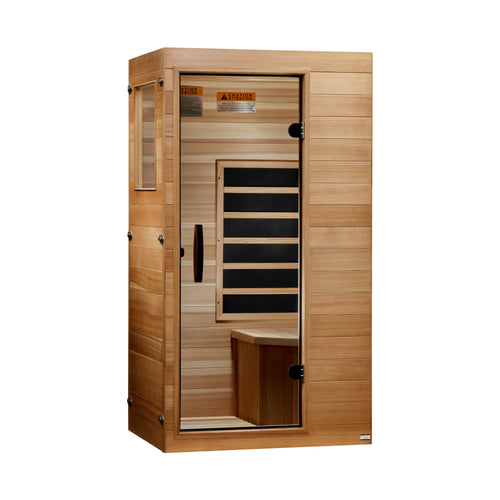
An infrared sauna plus a cold plunge tub is the contrast therapy protocol Huberman describes — available for home use, shipped free, assembled in an afternoon.
Safety: Who Should Be Cautious
Cold water immersion is not appropriate for everyone. Huberman is explicit about this in his content, and it's worth restating clearly:
- Cardiovascular conditions: The cardiac demand of cold immersion is real. Anyone with a history of heart disease, arrhythmia, or uncontrolled hypertension should speak to their cardiologist before starting.
- Raynaud's disease: Cold immersion can trigger severe vasospasm. Not recommended.
- Pregnancy: Core temperature changes from both cold and heat exposure are contraindicated without medical guidance.
- Never alone in deep immersion: Cold shock can cause sudden incapacitation. If using a full-body plunge tub, always have someone present for your first several sessions.
If you're healthy and without contraindications, the protocol is generally safe. Begin at the milder end of the temperature range, cap sessions at 2–3 minutes until you have established breathing control, and build up from there over several weeks.
Building the Habit: A 4-Week Ramp
Week 1
2 sessions. Water at 15°C. Maximum 2 minutes each. Focus entirely on breathing. Don't worry about the time — just establish control.
Week 2
3 sessions. Water at 13–15°C. 2–3 minutes each. You're now hitting close to the 11-minute weekly target. Notice the mood effect lasting into the afternoon.
Week 3
3 sessions. Water at 10–13°C. 3–4 minutes each. The psychological resistance to getting in should be noticeably reduced by now. That reduction IS the adaptation.
Week 4 onward
Settle into 3–4 sessions per week at your comfortable temperature. You've built the habit. Now the benefits compound — metabolic, mood, stress resilience — over months.
The Question of Cold Showers vs. Cold Plunge Tubs
Cold showers work, with important caveats. A shower at 10°C produces some of the neurochemical response, particularly if you're running it over the back of your neck and upper back where cold receptors are densest. But the core temperature drop that produces BAT activation requires full-body immersion, and a shower cannot replicate that.
If a cold plunge tub is not in your budget yet, cold showers are a legitimate starting point. Treat them as phase one of the practice — something you're doing to build the mental habit and get some of the dopamine benefit while you save for a proper setup.
Once you move to a tub, the difference in what you can feel is immediate and obvious. The temperature you can hold stable, the full immersion of your torso, and the consistency across sessions changes the quality of the protocol entirely.
"The willingness to do something that makes you uncomfortable, deliberately, on a schedule, is the practice. The cold plunge is just the context."
One Final Point Huberman Makes That Most People Miss
The goal is not to feel cold. The goal is to remain calm while feeling cold.
The neurological training value of cold exposure comes from the repeated practice of maintaining deliberate calm under a significant stress load. The catecholamine release happens automatically. The stress resilience has to be practiced. Every session where you breathe through the discomfort and choose to stay in is depositing something into your nervous system's capacity to handle stress without reflexive reaction.
That transfer effect — from the cold plunge to your actual life — is what Huberman argues makes this one of the highest-leverage practices available. Not because cold is magic, but because the mental practice has no off-season.
Ready to start the protocol at home? Browse our cold plunge tubs — four models from $499, all with free shipping and a 30-day return window.
Don't Miss the Science Behind Peak Recovery
Get the sauna buyer's guide: what the manufacturers' own manuals say about assembly, EMF and electrical requirements — the things most dealers leave you to find out after delivery.
Don't Miss the Science Behind Peak Recovery
Get the sauna buyer's guide: what the manufacturers' own manuals say about assembly, EMF and electrical requirements — the things most dealers leave you to find out after delivery.