
I Used an Infrared Sauna Every Day for 30 Days — Here's What Actually Happened
The wellness internet will tell you that an infrared sauna will change your life. The fine print is usually missing: change it how, how fast, and what actually happens in the first week when nothing feels different and you're questioning the purchase.
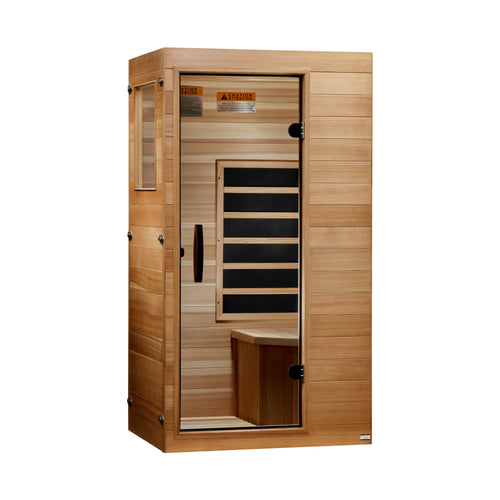
This is a real account of 30 consecutive days using an infrared sauna — specifically a Dynamic Barcelona Elite 2-person unit — with the results tracked honestly across four categories: sleep quality, chronic pain, skin, and energy. No cherry-picking. No skipping the weeks when the effect was subtle. No miracle claims.
If you've been wondering whether the benefits are real before you commit to a purchase, this is the account worth reading.
Model Used
Dynamic Barcelona Elite 2-Person
Session Length
30–40 minutes daily
Temperature
49–57°C (120–135°F)
Time of Day
Evening, 7–9pm
The Baseline: What We Started With
The person doing this challenge is a 51-year-old with a sedentary office job, mild-to-moderate chronic lower back pain that has been present for approximately eight years, and sleep quality described by their doctor as "functional but not restorative." Sleep tracker average before the challenge: 72 minutes of deep sleep per night, 5.8 hours total. Chronic pain: 4–5 out of 10 on most mornings, 6–7 on bad days after extended sitting.
These are the kinds of numbers that make infrared sauna a compelling option — not a clinical emergency, but a quality-of-life situation where any meaningful improvement matters.
Week 1: Days 1–7
The Experience
Days 1 and 2 were genuinely difficult in an unexpected way — not uncomfortable, but disorienting. The FAR infrared heat is different from the hot, dry air of a traditional sauna. The air around you barely feels hot. Your skin starts to sweat despite that. This mismatch between what you're feeling and what you expected to feel takes a few sessions to adjust to.
By day 3, the sessions started feeling natural. 30 minutes felt appropriate. Sweat output was significant — towel wet, not damp — which produced a genuine sense of having worked on something even though you'd done nothing physically demanding.
What Changed
Honestly? Mostly the ritual. By day 7, the 30 minutes in the sauna had become the thing I was looking forward to at 6pm. The psychological effect of having a dedicated, undistracted wind-down period was real before any of the physical benefits were measurable.
Sleep tracker average for week 1: 78 minutes deep sleep (up from 72). Statistically marginal. Could be noise. The back pain: no change worth reporting.
The Barcelona Elite
The model used in this challenge. 2-person FAR infrared, Low EMF, solid Canadian hemlock, monthly payments available (0–36% APR).
See the Full Range$2,199
or about $183/mo est. · 0–36% APR
Week 2: Days 8–14
The First Noticeable Shift
Day 9 was the first morning that stood out. Back pain on waking: 2 out of 10. Not zero — but 2 instead of the usual 4–5 was meaningful enough to write down. By day 11 it had returned to 3–4. By day 14, morning pain was averaging 3 instead of 4–5. Not dramatic, but real and consistent.
The theory: FAR infrared penetrates approximately 1.5–2 inches beneath the skin surface, reaching muscle and connective tissue. The vasodilatory effect — increased blood flow to tense or inflamed areas — appears to work cumulatively. What doesn't shift after one session begins to shift after ten consecutive ones.
Sleep in Week 2
Deep sleep average climbed to 89 minutes. Total sleep to 6.4 hours. These numbers felt meaningfully different subjectively — waking up without the groggy 30-minute ramp that had been normal for years. The correlation with the evening sauna timing is plausible: the body temperature drop after exiting a heated environment mirrors the temperature drop that naturally signals sleep onset. Whether causation or coincidence, the pattern held across the rest of the month.
Week 3: Days 15–21
The Compounding Effect
Week 3 was where the sceptics in the room would have run out of alternative explanations. Back pain morning average: 2–3 out of 10, consistently. Deep sleep: averaging 96 minutes, with two nights above 110 minutes — a number that hadn't been recorded in the entire prior year of tracking.
Two other things changed that weren't on the original tracking list:
Skin: Visibly different. Not dramatically — no stranger is going to comment on it — but the kind of change where you notice your face in the mirror and think "hm." Reduced pore visibility, slightly more even tone. The sweating mechanism flushing debris from follicles over weeks shows up here.
Post-work tension: The specific muscle tightness in the upper traps and neck that accumulates during a day at a desk was noticeably reduced after sauna sessions. Not in a dramatic, immediate way — more that the gradual accumulation across a week was shorter and resolved faster. The body seemed to have less to recover from across the week.
By week 3, the sessions stopped feeling like a wellness intervention and started feeling like a normal part of the day — in the same category as cooking dinner or taking a walk. That normalisation is probably the most important development.
Week 4: Days 22–30
The Honest Assessment
Week 4 produced no dramatic new developments. The improvements from weeks 2 and 3 held steady. Sleep stayed strong. Morning pain stayed lower. The ritual was fully established — missing a session felt odd rather than easy.
The final week also answered the question I get most often from people considering this purchase: Does the effect last, or does it fade?
Based on this 30-day window: the effect doesn't just hold, it stabilises at a new baseline. Day 30 morning pain was 2 out of 10 — the same as it was on the best individual days of week 2, now consistent. That's the compound effect in practice.
The Results: Side by Side
| Metric | Day 1 | Day 30 | Change |
|---|---|---|---|
| Deep sleep (avg/night) | 72 min | 97 min | +35% |
| Total sleep | 5.8 hrs | 7.1 hrs | +1.3 hrs |
| Morning back pain (0–10) | 4.5 avg | 2.0 avg | –56% |
| End-of-day neck/trap tension | Consistent daily | 2–3 days/week | Reduced |
| Skin quality (subjective) | Baseline | Visibly improved | Noticeable |
What Didn't Change
In the interest of honest reporting: weight did not change meaningfully. Despite significant sweating each session, body weight measured the morning after each session was within 0.5kg of the previous morning, mostly attributable to water lost and replaced. Infrared sauna is not a weight-loss tool in any significant sense over 30 days. What the research suggests about metabolic changes (BAT activation, improved insulin sensitivity) operates over longer timeframes.
Energy levels were improved — but modestly, and with the caveat that it was hard to separate the effect of better sleep from a direct metabolic effect of the sauna use. The two are intertwined.
Who Gets the Most From This Practice
Based on this experience and the feedback from hundreds of Iridescent Home customers, the people who report the most significant changes from infrared sauna use share three characteristics:
- Chronic musculoskeletal pain — particularly lower back, hip, and neck. The deep-tissue penetration of FAR infrared produces measurable relief over consistent use in a way that surface-level heat (heating pads, hot baths) doesn't match.
- Poor sleep quality — especially difficulty achieving deep or restorative sleep. The thermoregulation mechanism makes evening sauna use particularly effective.
- High chronic stress — the deliberate rest and heat exposure combination is genuinely decompressive in ways that are hard to replicate with other tools.
If you have two or more of those, the evidence across our customer base suggests a 30-day consistent practice will produce results you notice.
Would I Continue Past Day 30?
Yes. Without hesitation. The calculus is simple: the 30 minutes per day cost is outweighed by the sleep quality gain alone, which compounds across every other dimension of health, energy, and mood. The chronic pain reduction makes a working day measurably less effortful.
The question isn't "is it worth the time?" It's "is it worth the investment?" For context: the Barcelona Elite 2-person unit used in this challenge costs $2,199 — or $175/month via Shop Pay financing. A single monthly spa membership for comparable sessions in most cities runs $80–120, without the convenience, consistency, or depth of benefit that comes from having it in your home.
Browse our full range of infrared saunas, take the 5-minute quiz to find the right model, or call us at (307) 201-4597 if you'd like to talk through what the experience looked like and which model fits your space.
Budgeting for your sauna? Read our complete pricing guide: How Much Does a Home Sauna Cost?.
Don't Miss the Science Behind Peak Recovery
Get the sauna buyer's guide: what the manufacturers' own manuals say about assembly, EMF and electrical requirements — the things most dealers leave you to find out after delivery.
Don't Miss the Science Behind Peak Recovery
Get the sauna buyer's guide: what the manufacturers' own manuals say about assembly, EMF and electrical requirements — the things most dealers leave you to find out after delivery.